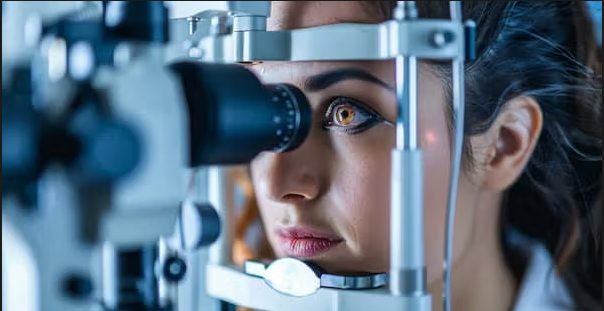
Persistently high blood sugar damages the tiny blood vessels in the retina, causing diabetic retinopathy. In its early stages it has no symptoms at all — yet it is one of the leading causes of preventable sight loss. By the time vision blurs, significant damage may already be done.
That is why every person with diabetes should have their eyes screened regularly, even if their vision feels fine. At Vishal Eye Center we carry out dilated retinal screening, monitor changes over time, and treat with laser or injections when needed.

A thorough look at the retina to spot early diabetic changes.
Targeted laser to seal leaking vessels and protect the retina.
Anti-VEGF injections for diabetic macular oedema when required.
Raised sugar weakens retinal blood vessels, which can leak fluid or bleed. Left unchecked, this leads to diabetic macular oedema (swelling of central vision) and, in advanced cases, growth of fragile new vessels that can cause bleeding and retinal detachment. Early stages are silent — which is what makes screening so valuable.
Good control of blood sugar, blood pressure and cholesterol is the foundation of protecting your eyes. Our screening and treatment work hand-in-hand with your physician's care — catching and treating retinal changes early while you manage diabetes overall.
Yes, absolutely. Early diabetic retinopathy has no symptoms, so vision can feel perfectly normal while damage is beginning. A yearly dilated screening is the best way to catch it in time.
Usually yes — drops widen the pupil so we can examine the whole retina. Your near vision may be blurry and light-sensitive for a few hours, so bring sunglasses and ideally someone to accompany you.
Early changes can often be stabilised and further damage prevented with treatment and good diabetes control. Advanced damage is harder to reverse, which is why early detection matters so much.
Depending on the stage, we use targeted laser to seal leaking vessels, or intravitreal injections for macular swelling. In advanced cases, vitreoretinal surgery may be needed — all available here.
Talk to Dr. Vishal Rajan Sharma about diabetic eye care. We'll assess your eyes and explain your options clearly — no pressure, just honest advice.